
Nimi Jataka
Nimi Jataka
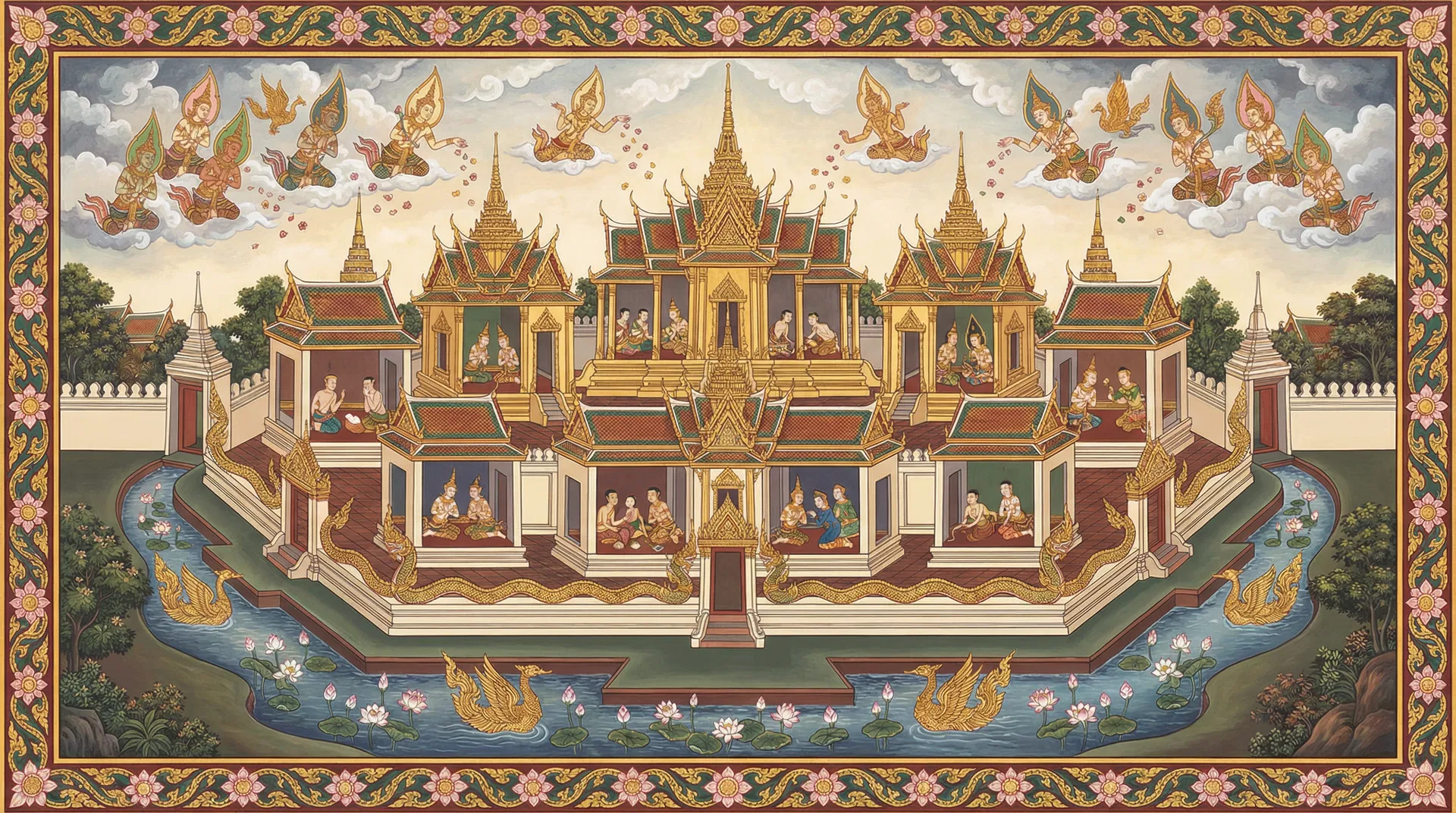
In the kingdom of Mithila, there lived a king named Nimi, who was renowned for his righteousness and his unwavering adherence to the principles of Dhamma. He was a king who ruled with compassion and justice, and his people were prosperous and happy under his benevolent reign. One day, King Nimi decided to perform a great sacrifice, not for personal gain, but to offer merit and well-being to all beings. He gathered all his subjects and declared his intention to do good deeds for the benefit of everyone. As he was performing this great act of merit, the King of the gods, Sakka, who resided in the celestial realm of Tavatimsa, was observing him. Sakka was impressed by King Nimi's devotion to righteousness and his selfless desire to bring happiness to others. Sakka decided to reward King Nimi for his virtues. He sent his celestial chariot, drawn by magnificent horses and shining with divine radiance, to fetch the king. The chariot descended from the heavens and appeared before King Nimi. Sakka's messenger, a divine being, invited the king to visit the celestial realms and witness the fruits of his good deeds. King Nimi, though surprised, accepted the invitation. He mounted the celestial chariot and was transported to Tavatimsa. There, he beheld sights of unimaginable beauty and splendor. He saw the celestial palaces, the gardens of eternal spring, and the joyful beings who resided there. He witnessed how the merit accumulated through virtuous deeds manifested as happiness and well-being in the heavens. Sakka welcomed King Nimi and showed him the wonders of his realm. He explained that the celestial happiness was the result of good karma, the consequences of righteous actions performed in earthly lives. Sakka then posed a question to King Nimi: 'Which is greater, the merit gained from performing good deeds, or the merit gained from understanding and practicing the Dhamma?' King Nimi, having always striven for righteousness, initially believed that performing good deeds was paramount. However, as he witnessed the profound peace and lasting happiness of the celestial beings, who lived in accordance with the Dhamma, he began to understand. He saw that while good deeds brought temporary rewards, a deep understanding and practice of the Dhamma led to a more profound and lasting state of bliss. After spending time in the celestial realms, King Nimi returned to his earthly kingdom. The experience had transformed him. He continued to rule with righteousness, but now with a deeper understanding of the Dhamma. He emphasized not just the performance of good deeds, but also the cultivation of wisdom, mindfulness, and ethical conduct. He taught his people that true happiness and liberation came from understanding the nature of reality and living in accordance with the highest principles. King Nimi's reign became even more glorious, known not only for its prosperity but also for the profound spiritual awakening it fostered among his people. He had learned that while acts of generosity are important, the true path to lasting well-being lies in the diligent practice and understanding of the Dhamma.
The practice of Dhamma, with its emphasis on wisdom and ethical conduct, yields a more profound and lasting happiness than mere acts of generosity alone. True liberation comes from understanding, not just from doing.
— In-Article Ad —
💡කතාවේ ආදර්ශය
Understanding and practicing Dhamma yields lasting happiness.
පාරමිතා: Wisdom (Prajna)
— Ad Space (728x90) —
ඔබට ප්රිය ජාතක කතා
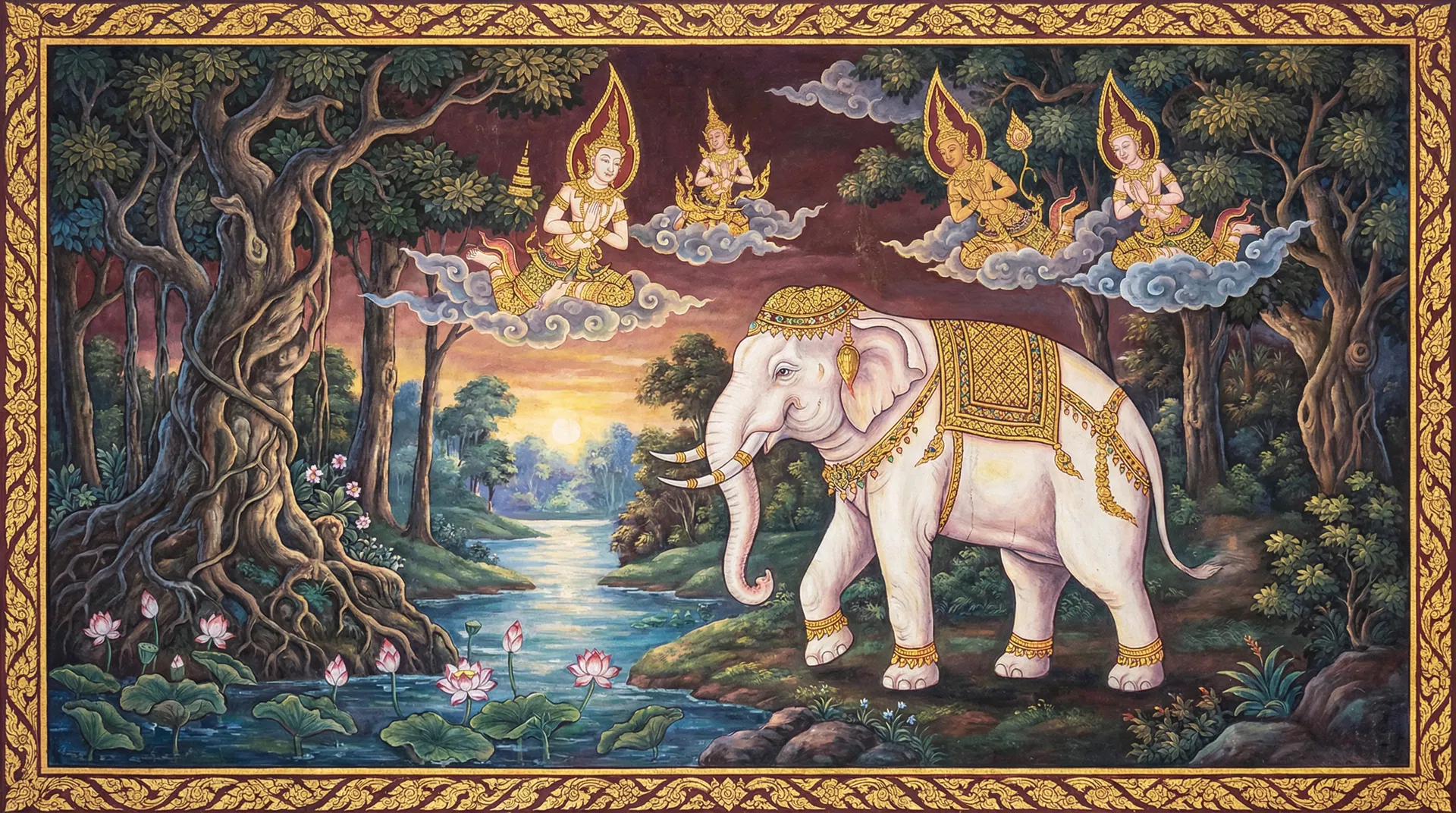 311Catukkanipāta
පරෙවි බෝසතාගේ ධර්ම දේශනය
පරෙවි බෝසතාගේ ධර්ම දේශනයඈත අතීතයේ, රම්බෑව නම් මහා වනයක් විය. එම වනයෙහි, පරෙවියන් විශාල රැලක් වාසය කළ...
💡 ධර්මයෙහි පිහිටා, කරුණාව හා දයාවෙන් කටයුතු කිරීමෙන්, අන් අයගේ කෲරත්වය පවා වෙනස් කළ හැකිය. ධර්ම දේශනා මගින් සැබෑ සාමය හා සමගිය ඇති වේ.
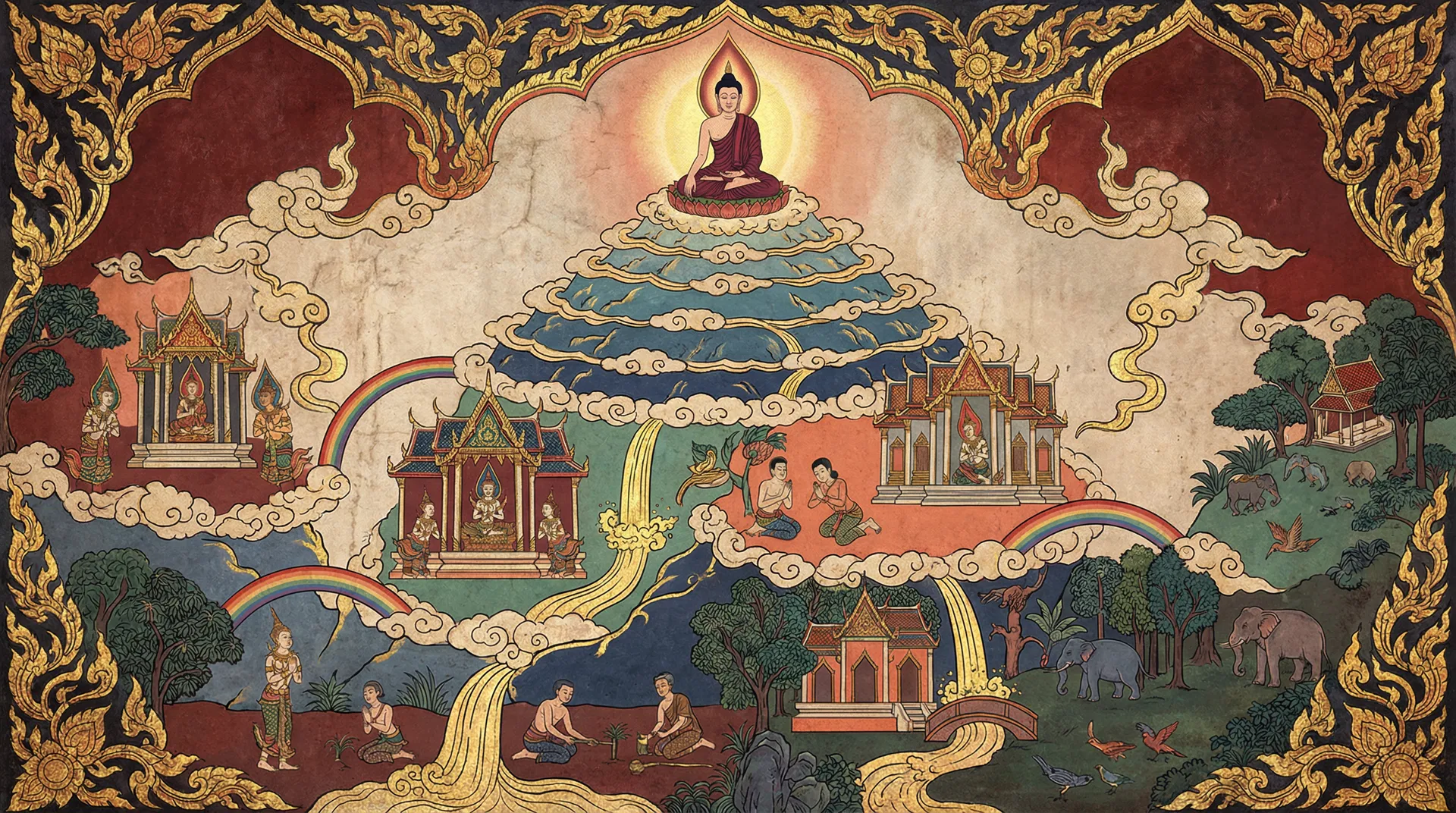 488Pakiṇṇakanipāta
බුදුන් වහන්සේ අශ්වයෙකුගේ ස්වරූපයෙන්
අශ්ව බෝසතාණන් වහන්සේ ඈත අතීතයේ, සාරවත් දේශයක, ශ්රද්ධාවන්ත රජෙකුගේ රාජධානියේ, රජුගේ අතිරේක අශ්වයා ලෙ...
💡 සැබෑ සැනසීම ධර්මයෙහි හැසිරීමෙන් හා පාරමී ධර්මයන් පිරීමෙන් ලැබේ.
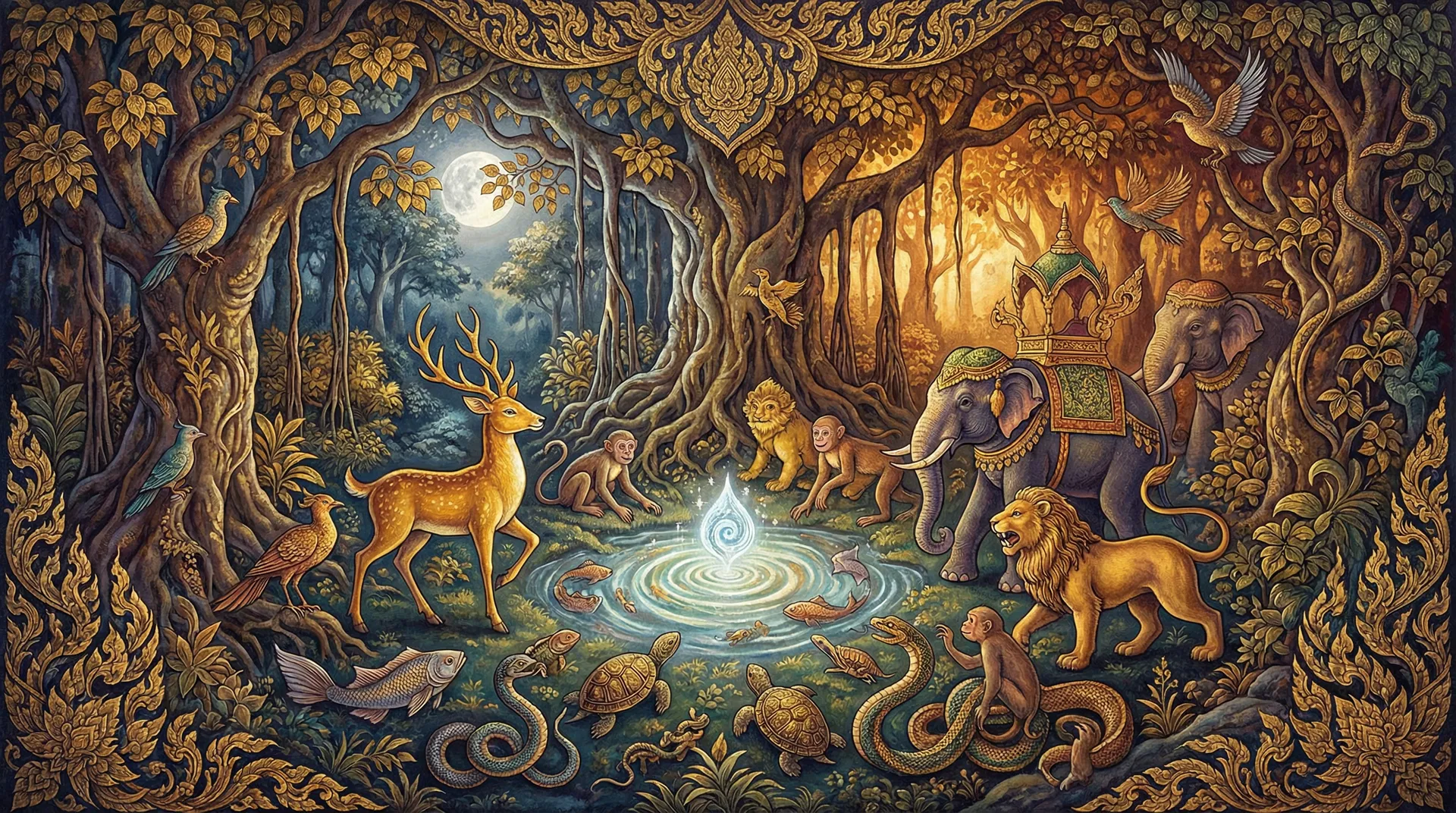 477Terasanipāta
මෝර රජුගේ ධර්ම දේශනාව
මෝර රජුගේ ධර්ම දේශනාව එදා හෙළ දිවයිනෙහි, ඈත අතීතයේ, රන්වන් හිරු රැස් කඳුකරය මතින් නැගෙන විට, ඝ...
💡 ඊර්ෂ්යාව සහ දුෂ්ටකම පරාජය කළ හැක්කේ ධර්මය, කරුණාව සහ ඤාණය මගිනි. ධර්මිෂ්ඨ පාලනයක් සැමවිටම සාමය හා සතුට උදා කරයි.
484Pakiṇṇakanipātaපරෝපකාරී මුවා
පරෝපකාරී මුවා ඈත අතීතයේ, විශාල කැලෑවක, ඝන වෘක්ෂලතා අතර, සශ්රීක හරිත පැහැයෙන් දිදුලන මනස්කාන්ත භූමි...
💡 පරෝපකාරීකම සහ අනුකම්පාවෙන් කටයුතු කිරීමෙන්, දුෂ්ටයන් පවා යහපත් අය බවට පත් කළ හැකිය.
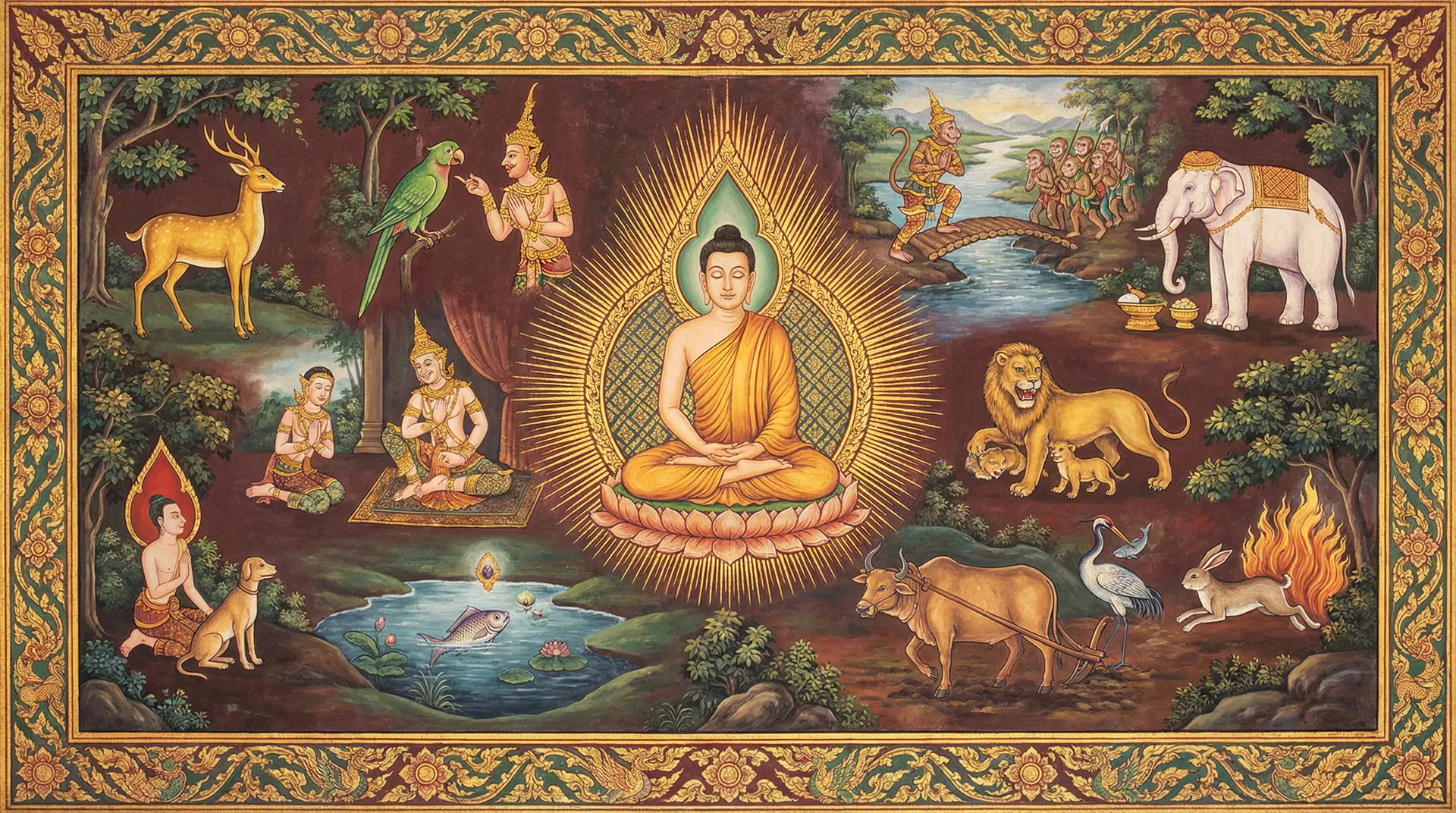 445Dasakanipāta
පොණ්ඩුක සෙප්පඩ ජාතකය (Pondhuka Seppada Jataka)
පොණ්ඩුක සෙප්පඩ ජාතකයඅතීතයේ, කසී දේශයේ, බරණැස් නුවර, බෝසතාණන් වහන්සේ, විචිත්ර රන්වන් පැහැයෙන් දිදුළෙ...
💡 අර්බුදකාරී අවස්ථාවලදී, ඤාණය, ධෛර්යය සහ එකමුතුකම යනු ජීවිතය ගලවා ගැනීමට ඇති ප්රධානම මෙවලම් වේ. නායකයෙකුගේ මඟ පෙන්වීම, අසරණ අයට බලාපොරොත්තුවක් ලබා දෙයි.
 461Ekādasanipāta
අංකුස ජාතකය
අංකුස ජාතකය කතාව ආරම්භය: ඈත අතීතයේ, බරණැස් නුවර රජකම් කළ බ්රහ්මදත්ත රජතුමාගේ සමයේ, ඒ රජුට අතිශයින්ම...
💡 සියලු සංවරයන්ගෙන් යුතුව කටයුතු කිරීම, සියලු උපද්රවයන්ගෙන් ආරක්ෂා වීමට ඇති අතිශය බලවත්ම මාර්ගයයි.
— Multiplex Ad —